The idea of a perfect day is something I’ll need to ponder a while. Certainly a good day involves a good chat with a close friend or family member, sunshine, and something absolutely scrumptious to eat. As Anna pointed out, work does tend to take time away from other things that are important to us, but for most of us, it’s hard to get away from, whatever form it takes.
Some years back I came across a book called Endangered Pleasures, by Barbara Holland. The book is full of short essays about simple joys: from baths and showers to the morning paper, naps, and pets, to mail and bare feet. Two essays that stood out to me were on “Working” and “Not Working.” Oh, the joys of working. Getting a paycheck. Leaving a desk at night and coming back the next day to find everything in exactly the same way you left it (unless you have an ambitious custodial crew). The authors says it nicely:
“The human mind, bewildered by imagination and free will and anxiety and other purely human problems, longs for order. The job supplies it. Perhaps we work for lunatics in a state of constant chaos, but still employment expects us to be in a set place at a set time and concentrate on a set job. The chaos tends to be predictable, even for those in erratically crisis-prone jobs, like firefighters or budget directors.
“At home, especially with a family around us, anything can happen and all of it’s our responsibility. The ceiling falls into the bathtub, the gerbil bites the baby, the baby drinks the Windex, the pipes freeze, there’s a bat in the bedroom or a dead mouse in the oven or a burglar in the living room, the bank threatens to foreclose on the mortgage, and we’re expected to cope. At work, most of us can pass the buck, or some of the bucks. Even the CEO can hand it to the board of directors, who can hand it to the stockholders.
“On the job, we know what we’re supposed to be doing at any given moment. At home we rarely do, and if we did, there’s still no way to organize the priorities. Even while we’re gathering up the trash the dog spread over the kitchen floor, we wonder if we ought to be paying bills instead, while at that very moment the children have found a ladder and are preparing to maroon the baby on the roof. Usually, at work, someone has set limits on what can happen; in the anarchy of home, the worst-case scenario changes hourly.”
I’d love to quote the whole article but I’ll restrain myself. Even though I don’t have children, I share my home with other living beings and I know the chaos and the neverendingness of work at home. My various kinds of work and pleasures involve lots of paper—teaching, editing, writing, genealogy—and in spite of computers, the paper piles keep growing. And while the people in my house mostly take care of themselves (except for the dishes), I have several cats—12, for those who wonder—and while they mostly get along, once in a while, someone walks too close to someone else, someone pokes someone else, or gets into another’s space. And of course, there are mealtimes and cleanup. I know most people can't relate to my lifestyle ,and I can understand how people with children see pets as one more family member to clean up after, but for those who have a full house already, picture your life if you’d never married or had children, and how you would fill that space that your family currently occupies. It's a big space, isn't it?
But back to the subject of working outside of the home. I like many things about working. I love having an office or a workplace, a computer, printer, copy machine, vending machines. I like paychecks and bonuses. I even like meetings. I like the feeling of accomplishment that comes from finishing a project and doing a tough job well. I like not having to be around dishes that need doing or a floor that needs mopping or vacuuming, and even, sometimes, not being around cats who climb all over my keyboard or my shoulders while I’m working on my computer at home.
As for not working, Barbara Holland offers some things to appreciate, regardless of the reason for staying at home (although the reason can make all the difference, whether it's illness, unemployment, or winning the lottery). Consider the pleasure of wearing pajamas or sweats until you feel like getting dressed. Or staying home and drinking hot chocolate on a snowy day when others are slowly making their way to work, slush and ice under their spinning tires. Listening to traffic reports and knowing the only “jam” you’ll encounter that day is on your toast. Not working means you can busy yourself around the house, indoors, where it’s warm on a frigid day, or outside in the garden when it’s beautiful outdoors and everyone who works is stuck indoors (frequently with an overactive air conditioner).
Whatever we do, there are pleasures to be found. And when we’ve had our fill, it may be time to try the grass on the other side of the fence.
Monday, March 15, 2010

Friday, March 12, 2010
Ingredients of a Perfect Day
Mmm - should that be ingredients "of" a perfect day or ingredients "for" a perfect day?
Continuing the "day" thread, posted above my computer is a thought-provoking piece done in beautiful calligraphy. I've used it as a thought for the day which I used to send to my kids every morning, and given it to one granddaughter who is collecting special thoughts to post on the walls in her bedroom. I wish I could do it here in a font similar to the original, but you can use your imagination:
Take time to think - It is the source of power.
Take time to play - It is the secret of perpetual youth.
Take time to pray - It is the greatest power on earth.
Take time to read - It is the foundation of wisdom.
Take time to love and be loved - It is a God-given privilege.
Take time to be friendly - It is the road to happiness.
Take time to laugh - It is the music of the soul.
Take time to give - It is too short a day to be selfish.
There you have the ingredients for a perfect day. I would put them in a different order, beginning with prayer, then reading, as in scripture study, then the thinking (pondering) would probably come next, but in reality, it doesn't matter in what order you do them, as long as you do each of them each day.
I have a problem with being too accomplishment-oriented. I make my list of things-to-do-today and work diligently to get everything checked off. What I don't do is put on it some of those more important things, like reading just for fun, calling a friend to see how she's surviving her teenagers, or even just turning off the book on CD as I drive in the car to think and ponder. My husband is a great thinker. He solves lots of problems in marvelously inventive ways, just by sitting still or laying down and closing his eyes and relaxing - and thinking.
Today I think I'll take each of these ingredients and see if I can work some magic to make it a perfect day - after my visiting teachers visit, and I take a lady to the vet for her dog's shots, and deliver a baby quilt, and do a return to Ross, and run to the grocery store, and make a zillion phone calls, and see if I can entice a lady on our visiting teaching list to get out of the house and go to lunch with me and quit dwelling on her children's problems for an hour, and do the laundry, and catch up my journal and finish getting the financial figures ready to do our taxes and...........mmm...........do you see a pattern emerging here?
Anna, we are indeed sisters. Interesting that life gets in the way of all of our good intentions. But if we keep trying, maybe someday, we'll have that perfect day.
Continuing the "day" thread, posted above my computer is a thought-provoking piece done in beautiful calligraphy. I've used it as a thought for the day which I used to send to my kids every morning, and given it to one granddaughter who is collecting special thoughts to post on the walls in her bedroom. I wish I could do it here in a font similar to the original, but you can use your imagination:
Take time to think - It is the source of power.
Take time to play - It is the secret of perpetual youth.
Take time to pray - It is the greatest power on earth.
Take time to read - It is the foundation of wisdom.
Take time to love and be loved - It is a God-given privilege.
Take time to be friendly - It is the road to happiness.
Take time to laugh - It is the music of the soul.
Take time to give - It is too short a day to be selfish.
There you have the ingredients for a perfect day. I would put them in a different order, beginning with prayer, then reading, as in scripture study, then the thinking (pondering) would probably come next, but in reality, it doesn't matter in what order you do them, as long as you do each of them each day.
I have a problem with being too accomplishment-oriented. I make my list of things-to-do-today and work diligently to get everything checked off. What I don't do is put on it some of those more important things, like reading just for fun, calling a friend to see how she's surviving her teenagers, or even just turning off the book on CD as I drive in the car to think and ponder. My husband is a great thinker. He solves lots of problems in marvelously inventive ways, just by sitting still or laying down and closing his eyes and relaxing - and thinking.
Today I think I'll take each of these ingredients and see if I can work some magic to make it a perfect day - after my visiting teachers visit, and I take a lady to the vet for her dog's shots, and deliver a baby quilt, and do a return to Ross, and run to the grocery store, and make a zillion phone calls, and see if I can entice a lady on our visiting teaching list to get out of the house and go to lunch with me and quit dwelling on her children's problems for an hour, and do the laundry, and catch up my journal and finish getting the financial figures ready to do our taxes and...........mmm...........do you see a pattern emerging here?
Anna, we are indeed sisters. Interesting that life gets in the way of all of our good intentions. But if we keep trying, maybe someday, we'll have that perfect day.
Thursday, March 11, 2010
Ideal Days
I'm going to do a follow-up on Anna's wonderful post about ideal days and real days.
When a day turns out even a wee bit like we've planned, we not only call it an ideal day but an idyllic day. We don't get many idyllic days in our lifetimes, but when we do we remember them forever. "Hey! Remember that trip to Disneyland in 1992 when the weather was perfect, the lines were short, and nobody got sick?" or "Honey, remember that day when you and I got a babysitter for the kids and we packed a picnic and went hiking?" or when my daughter says, "Mom, remember that Thanksgiving when you and I set an elegant table together, everyone pitched in and brought yummy food, and the men did the dishes?"
I'm noticing a pattern here. Most of my idyllic days revolve around family and the time we spend together. Now, don't get me wrong, our family is just as crazy as yours: rushing to get to places on time, arguments, house a mess, chaos, sadness, and challenges. But, I don't really remember those horrid times. Amazingly, as the months and years go by, those hard times fade, and the good and idellyic times seem to shine out like warm little suns. Funny how that happens.
I don't think today is going to be anything special. I have laundry to do and a bunch of correspondence to send. I'm attending a political rally, grocery shopping, and making dinner. It doesn't sound like this is going to be one of those "remember when" days. But, you never know--maybe my hubby will surprise me with flowers. The point is, everyday is precious, everything from sunset walks on a beach in Hawaii, to standing in line at the super market. The mundane days build character, the idyllic days nourish the soul.
When a day turns out even a wee bit like we've planned, we not only call it an ideal day but an idyllic day. We don't get many idyllic days in our lifetimes, but when we do we remember them forever. "Hey! Remember that trip to Disneyland in 1992 when the weather was perfect, the lines were short, and nobody got sick?" or "Honey, remember that day when you and I got a babysitter for the kids and we packed a picnic and went hiking?" or when my daughter says, "Mom, remember that Thanksgiving when you and I set an elegant table together, everyone pitched in and brought yummy food, and the men did the dishes?"
I'm noticing a pattern here. Most of my idyllic days revolve around family and the time we spend together. Now, don't get me wrong, our family is just as crazy as yours: rushing to get to places on time, arguments, house a mess, chaos, sadness, and challenges. But, I don't really remember those horrid times. Amazingly, as the months and years go by, those hard times fade, and the good and idellyic times seem to shine out like warm little suns. Funny how that happens.
I don't think today is going to be anything special. I have laundry to do and a bunch of correspondence to send. I'm attending a political rally, grocery shopping, and making dinner. It doesn't sound like this is going to be one of those "remember when" days. But, you never know--maybe my hubby will surprise me with flowers. The point is, everyday is precious, everything from sunset walks on a beach in Hawaii, to standing in line at the super market. The mundane days build character, the idyllic days nourish the soul.
Tuesday, March 9, 2010
Just a Perfect Day
After my usual half-hour of morning scripture study I gently awaken my sleeping children. Full of energy they bound down the stairs for a healthy breakfast, then scamper back up again to brush their teeth and dress themselves in their freshly-ironed uniforms as the eldest leaves, with a cheery wave, to walk to her senior school. We cycle to the primary school and arrive in plenty of time, and once they are both at their desks I set off home. An hour of housework, then I settle down to read a chapter of a book as I drink my morning hot chocolate and chat to my husband. Then it's time to write. I write 2,000 words before lunch, then hang the washing out to dry and settle down again to revise a couple of chapters of another work in progress. My husband elects to collect the children from school so that I can carry on with my writing. At 5 p.m. I close the laptop, having written 3,000 words and revised 5,000 more, and start cooking tea. We eat together, chatting about our day, and then the children head up the stairs for bed at 8 p.m. and Hubby Dearest and I settle down to watch a good film together.
That's my ideal day. What actually happens is this:
I keep hitting snooze, so don't get up in time to do more than ten minutes' scripture study before it's time to yell at the children, who all refuse to get up. I can't find any clean uniform, and they all insist on ice-cream and noodles for breakfast. We are so late leaving for school that we have to go in the car and then we can't find anywhere to park. I arrive back home eventually and stumble past the dirty breakfast bowls, filthy floor and mounds of laundry to go to my cold, damp office (at the back of the garage) and do five hours' paid work for a legal charity. As soon as I finish it's time to drive back to school in order to secure a space in the tiny car park. I sit in the cold car for half an hour, reading a book, and then walk into the playground to collect the children. It's raining, and they're late coming out, so I'm soaked by the time we get home. They all demand snacks and drinks at once, and they all have homework they need help with, so I throw a pizza in the oven for tea (for the second time this week) since I don't have time to make anything else. After the usual tears-at-bedtime routine, I stumble down the stairs to start work on the scene of devastation, and spend the next hour doing housework and laundry before Hubby Dearest arrives home from his meeting, and we collapse, exhausted, into bed.
Did you notice the crucial thing missing from my day? I didn't do any writing. And that's the problem. I like my job, and I like that it pays me money, but I would love not to have to work. I just want to write. It is a wrench to have to go to that office every morning when my house needs to be cleaned, and my laptop is calling out to me, reminding me that I have left characters languising lost in a strange jungle. Any writing I manage to do is a snatched five minutes here and there, which doesn't help with continuity.
But one day I hope that perfect day will be mine. I will make enough money from a book to be able to give up my job and write for a living. So I suppose I had better work harder at finding time to write that pot of gold...
OK, moan over, I feel better now.
That's my ideal day. What actually happens is this:
I keep hitting snooze, so don't get up in time to do more than ten minutes' scripture study before it's time to yell at the children, who all refuse to get up. I can't find any clean uniform, and they all insist on ice-cream and noodles for breakfast. We are so late leaving for school that we have to go in the car and then we can't find anywhere to park. I arrive back home eventually and stumble past the dirty breakfast bowls, filthy floor and mounds of laundry to go to my cold, damp office (at the back of the garage) and do five hours' paid work for a legal charity. As soon as I finish it's time to drive back to school in order to secure a space in the tiny car park. I sit in the cold car for half an hour, reading a book, and then walk into the playground to collect the children. It's raining, and they're late coming out, so I'm soaked by the time we get home. They all demand snacks and drinks at once, and they all have homework they need help with, so I throw a pizza in the oven for tea (for the second time this week) since I don't have time to make anything else. After the usual tears-at-bedtime routine, I stumble down the stairs to start work on the scene of devastation, and spend the next hour doing housework and laundry before Hubby Dearest arrives home from his meeting, and we collapse, exhausted, into bed.
Did you notice the crucial thing missing from my day? I didn't do any writing. And that's the problem. I like my job, and I like that it pays me money, but I would love not to have to work. I just want to write. It is a wrench to have to go to that office every morning when my house needs to be cleaned, and my laptop is calling out to me, reminding me that I have left characters languising lost in a strange jungle. Any writing I manage to do is a snatched five minutes here and there, which doesn't help with continuity.
But one day I hope that perfect day will be mine. I will make enough money from a book to be able to give up my job and write for a living. So I suppose I had better work harder at finding time to write that pot of gold...
OK, moan over, I feel better now.
Wednesday, March 3, 2010
Where have all the cowboys gone?
 Not long ago I watched some little boys playing. They were pretending to be various Star Wars characters, Spiderman, or various other super heroes. It dawned on me that there were a lot of similarities between their game and the games I played with my brothers and neighborhood children when I was their age, only instead of superheroes, we were cowboys, Indians, and outlaws. Whatever the game is called, it's really a game of children looking up to "bigger than life" heroes, a belief that good can triumph over evil, and an attempt to prove that honor matters. It's the creation of an imaginative world, peopled by good guys who outsmart and out-maneuver the bad guys.

Every generation has its own set of heroes. Mine wore chaps, Stetsons, and boots. My grandsons' wear Power Rangers Helmets. Mine carried a rifle and wore a six-shooter on his hip. My grandsons' heroes carry ray guns and atomic blasters. Mine rode Trigger or Silver. Theirs ride space ships. Mine were the best because they could out-track, out-shoot, or out-smart their enemies. Theirs are the best because they have special powers. (Special powers are okay, I guess, so long as they aren't getting those powers by ingesting some kind of substance that equates in my mind a little too closely to drugs.) I suppose my grandsons will go on to read Science Fiction the way I graduated to Louis L'Amour books, The Virginian, and Jeanne Williams.
As adults we never quite outgrow our childhood heroes. I know adults who own every Star Wars or Superman DVD, toy, or book. There are many adults who collect cowboy movies, decorate their homes with a Southwest motif, and haunt garage sales to buy up Louis L'Amore and Zane Grey novels. And I'll admit I'm among those who still love a good Western novel.
Westerns are few and far between in LDS writing circles today, so I don't often get to read one. In fact they're a diminishing genre in the general market too. There's still a good number of Western fans, but many of us are turned off by many of the newer writers who fill their pages with profanity, sex, and excessive violence in place of the old "code of the West." So I was pleasantly surprised when recently Return of the Outlaw by C.M. Curtis landed on my desk and I'll admit I was anxious to read it. It's the story of a young Civil War hero who returns home to find his sweetheart engaged to someone else. He drifts farther west, then after his father's death he returns home to claim the family ranch, only to find a crooked outlaw has claimed it. In the ensuing fight to reclaim his property, his friends are killed, he evades several traps, and is branded an outlaw. It's filled with clever tactics, plenty of action, a little bit of romance, and the pursuit of justice. All in all it was a satisfying read, and for me, a terrific break from more contemporary books.
There's a great Western included in the Whitney's Best Romance category this year. I'm not sure why it was put in the Romance Category, possibly because there isn't a Western category and the General category was already pretty full. There's a relationship between a cowboy and some other dude's wife, but I wouldn't call it a romance; they're both in love with the same person--her. But forget the romance elements, Counting the Cost by Liz Adair is the best Western I've read in a long time and as I've said before I'm a Western fan. This one is gritty, but not profane. There's an illicit relationship, but it's not in our face and the cowboy is painfully aware it's not right. The life and actions of the cowboy are heartbreakingly realistic. And though I didn't care much for the woman in the story, I could still sympathize with the hardships her cowboy's life inflicted on her. I think most readers, Western fans or not, will agree Liz Adair is a particularly talented writer and I personally think her understanding of the early twentieth century cowboy is one of the best I've run across.
I'm not aware of a large number of LDS Western Writers. There's Lee Nelson, Marcia Ward, Liz Adair, and myself (though I write other genres as well), so it's fun to welcome C.M. Curtis to our ranks. And readers, if it has been awhile since you read a Western, give one a try. I'd hate to think the Western Writer might give way completely to electronic space rangers. After all, how can a robot compare to a horse!
So where have all the cowboys gone? Not too far I hope. One of my grandsons recently lost a grandfather on the other side of his family. The man left his hat to his grandson, a great big felt Stetson. I'm pleased to say that hat thrills that little boy as much as his Power Ranger helmet does.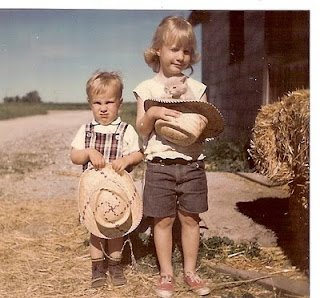
Tuesday, March 2, 2010
Toyota, Black Mamba and The Pants!
My friends here have been so eloquent this last week or so that I hate to even add to the posts! My thoughts today will feel like plunging into ice water in comparison. Feel free to stop reading now. ;-)
I've been watching the news and reading the paper with interest. Here's some of what has stuck out to me:
*The suit that O.J. Simpson wore when he was acquitted is going to be offered to the Smithsonian. My sincere hope is that the Smithsonian will say, "No, thank you."
*Toyota is being raked over the coals, among other things, for failure to alert the public for possible problems with their cars. Now GM is doing a recall on cars that may not steer well when driving under 15 miles an hour. Presumably, this will make the most-accidents-happen-within-two-miles-from-home statistic skyrocket. I'm thinking I should invest in a tandem bicycle for my family of 5. Might make school carpooling a bit of a challenge...
*My kids' school district sent home a notice that "Black Mamba" is now being banned from the schools in spite of the fact that it's not a illegal substance. Yet. Supposedly it has the same properties as marijuana. Now, I may not be remembering correctly and I threw the paper out, but I believe it can be burned as incense. Methinks school attendance would triple if teachers were allowed to use this in the classroom. ;-)
*The Norwegian Curling team's pants. Oh, how I loved those pants! The daily Facebook updates were a joy. I am a solid one-half Norwegian; I claim a special affinity to the pants.
*Lindsey Vonn is too unbelievably cute. Shouldn't be allowed.
*Kim Yu Na is the most amazing thing on ice I've ever seen and was a joy to watch. I did so with my mouth hanging open.
*Joannie Rochette is a beautiful example of grace and perseverance under extreme pressure and grief. What a lady. And a strong one.
*Gerald Imber wrote a book on William Halsted, America's "first" surgeon, entitled Genius on the Edge. In the book, Imber talks about how in the early days of anesthetic during dentistry, cocaine was used as a local. Um, yeah. Something tells me people didn't mind going to the dentist in those days. ;-) On a more serious note, though, the book looks absolutely amazing and I'll be buying it soon. Here's a link, if you're interested.
*First Haiti, then Chile. I am mindful of the fact that I live, literally, on a fault line. My home was built in the 40s. I hope to be able to find a sturdy doorway that will shield me...otherwise, please remember me fondly. (And may it not happen until both of my daughters are paramedics. I like to think of them as rescuers.)
*The Ogden Temple is going to receive a facelift over the next couple of years. I am ok with this, because the original design of the building has been totally botched, anyway. The architect designed the Provo and Ogden temples to be symbolic of the Lord leading the children of Israel out of Egypt. They were led with a "cloud by day" and "pillar (of fire) by night." The body of the temple's building itself was to represent the cloud, and the spire, which was originally painted gold, to represent the pillar of fire. Well, a couple of years ago a statue of Moroni was added to the spire, which was fine, of course, but THEY PAINTED THE SPIRE WHITE. Totally ruined it for me. I now look at the redesign pictures with anticipation. It's going to be beautiful.
Well, now that I spewed all of that, I feel better. Please feel free to agree or disagree. And have a fabulous March! I'm so glad we're done with January and February. Spring is in the air! My five-year-old said this morning, "Mom! The birds are back!"
So true- hallelujah, the birds are back!
I've been watching the news and reading the paper with interest. Here's some of what has stuck out to me:
*The suit that O.J. Simpson wore when he was acquitted is going to be offered to the Smithsonian. My sincere hope is that the Smithsonian will say, "No, thank you."
*Toyota is being raked over the coals, among other things, for failure to alert the public for possible problems with their cars. Now GM is doing a recall on cars that may not steer well when driving under 15 miles an hour. Presumably, this will make the most-accidents-happen-within-two-miles-from-home statistic skyrocket. I'm thinking I should invest in a tandem bicycle for my family of 5. Might make school carpooling a bit of a challenge...
*My kids' school district sent home a notice that "Black Mamba" is now being banned from the schools in spite of the fact that it's not a illegal substance. Yet. Supposedly it has the same properties as marijuana. Now, I may not be remembering correctly and I threw the paper out, but I believe it can be burned as incense. Methinks school attendance would triple if teachers were allowed to use this in the classroom. ;-)
*The Norwegian Curling team's pants. Oh, how I loved those pants! The daily Facebook updates were a joy. I am a solid one-half Norwegian; I claim a special affinity to the pants.
*Lindsey Vonn is too unbelievably cute. Shouldn't be allowed.
*Kim Yu Na is the most amazing thing on ice I've ever seen and was a joy to watch. I did so with my mouth hanging open.
*Joannie Rochette is a beautiful example of grace and perseverance under extreme pressure and grief. What a lady. And a strong one.
*Gerald Imber wrote a book on William Halsted, America's "first" surgeon, entitled Genius on the Edge. In the book, Imber talks about how in the early days of anesthetic during dentistry, cocaine was used as a local. Um, yeah. Something tells me people didn't mind going to the dentist in those days. ;-) On a more serious note, though, the book looks absolutely amazing and I'll be buying it soon. Here's a link, if you're interested.
*First Haiti, then Chile. I am mindful of the fact that I live, literally, on a fault line. My home was built in the 40s. I hope to be able to find a sturdy doorway that will shield me...otherwise, please remember me fondly. (And may it not happen until both of my daughters are paramedics. I like to think of them as rescuers.)
*The Ogden Temple is going to receive a facelift over the next couple of years. I am ok with this, because the original design of the building has been totally botched, anyway. The architect designed the Provo and Ogden temples to be symbolic of the Lord leading the children of Israel out of Egypt. They were led with a "cloud by day" and "pillar (of fire) by night." The body of the temple's building itself was to represent the cloud, and the spire, which was originally painted gold, to represent the pillar of fire. Well, a couple of years ago a statue of Moroni was added to the spire, which was fine, of course, but THEY PAINTED THE SPIRE WHITE. Totally ruined it for me. I now look at the redesign pictures with anticipation. It's going to be beautiful.
Well, now that I spewed all of that, I feel better. Please feel free to agree or disagree. And have a fabulous March! I'm so glad we're done with January and February. Spring is in the air! My five-year-old said this morning, "Mom! The birds are back!"
So true- hallelujah, the birds are back!
Friday, February 26, 2010
Anna and Cheri's poetry, and Anna's suggestion that we make this a poetry week, brought to mind my poetry days. I don't think I could write a poem today if my life depended on it, but I have a file that suggests at one time I did "wax poetic" frequently.
My husband spent 15 months on a remote tour in Turkey (that means without family for you non-military types.) And long before that, before we had children, he spent three weeks on nuclear alert in England, came home for three weeks and went back again for many months, so I had a fair amount of time alone.
This is the result of one of those long, lonely periods. I can still picture the setting - it was Plattsburgh, New York, October, 1962. As I returned home from a function at the church, it was cold, getting dark, and as the wind blew leaves across the empty street in front of my car, I felt lonely, heartbreakingly lonely.
Lonely is a quiet thing:
The falling of a tear
Unnoticed down a soft pink cheek
As twilight shadows near.
It's leaves blown down an empty street
When no one's there to share
The magic of the cool night breeze . . .
When no one's there to care.
Lonely is a restless sea
Lapping on the shore,
A heart that aches with missing you,
And still I miss you more.
Lonely is a far off train
Crying in the night
That chills you as you sit alone,
Alone in the moon's pale light.
Lonely is the twilight hour
When all the world is still . . .
Waiting for one who has not come.
Perhaps he never will.
That was the height of the cold war. Many of you weren't even born yet, but every time the planes took off, we were never certain they would return. Actually, many didn't. Pilot error and mechanical malfunction took too many good men. Especially worrisome was flying long hours over the North Atlantic when, if something went wrong and the plane went down, there wasn't a lot of hope of rescue before the crew died of exposure in the icy water. A totally different world from today.
How few people were even aware their freedoms were being protected by a small number of flight crews sitting alert in concrete bunkers for seven days at a time with nuclear weapons loaded on board their planes, just waiting for the klaxon to sound and send them off to retaliate against Russian targets - and hoping it never happened. Thank heaven it never did.
What memories come flooding back with reading that poem written so long ago. Thanks, Anna, for suggesting we share. I haven't even looked at those for probably 20 years. Guess it's time to go through the file and enter them into my computer - a technology I couldn't have even imagined at the time that poem was written, and something I can't imagine trying to live without today. How far we've come.
My husband spent 15 months on a remote tour in Turkey (that means without family for you non-military types.) And long before that, before we had children, he spent three weeks on nuclear alert in England, came home for three weeks and went back again for many months, so I had a fair amount of time alone.
This is the result of one of those long, lonely periods. I can still picture the setting - it was Plattsburgh, New York, October, 1962. As I returned home from a function at the church, it was cold, getting dark, and as the wind blew leaves across the empty street in front of my car, I felt lonely, heartbreakingly lonely.
Lonely is a quiet thing:
The falling of a tear
Unnoticed down a soft pink cheek
As twilight shadows near.
It's leaves blown down an empty street
When no one's there to share
The magic of the cool night breeze . . .
When no one's there to care.
Lonely is a restless sea
Lapping on the shore,
A heart that aches with missing you,
And still I miss you more.
Lonely is a far off train
Crying in the night
That chills you as you sit alone,
Alone in the moon's pale light.
Lonely is the twilight hour
When all the world is still . . .
Waiting for one who has not come.
Perhaps he never will.
That was the height of the cold war. Many of you weren't even born yet, but every time the planes took off, we were never certain they would return. Actually, many didn't. Pilot error and mechanical malfunction took too many good men. Especially worrisome was flying long hours over the North Atlantic when, if something went wrong and the plane went down, there wasn't a lot of hope of rescue before the crew died of exposure in the icy water. A totally different world from today.
How few people were even aware their freedoms were being protected by a small number of flight crews sitting alert in concrete bunkers for seven days at a time with nuclear weapons loaded on board their planes, just waiting for the klaxon to sound and send them off to retaliate against Russian targets - and hoping it never happened. Thank heaven it never did.
What memories come flooding back with reading that poem written so long ago. Thanks, Anna, for suggesting we share. I haven't even looked at those for probably 20 years. Guess it's time to go through the file and enter them into my computer - a technology I couldn't have even imagined at the time that poem was written, and something I can't imagine trying to live without today. How far we've come.
Subscribe to:
Posts (Atom)